How Jaypore Used E-Commerce to Build a National Lifestyle Brand
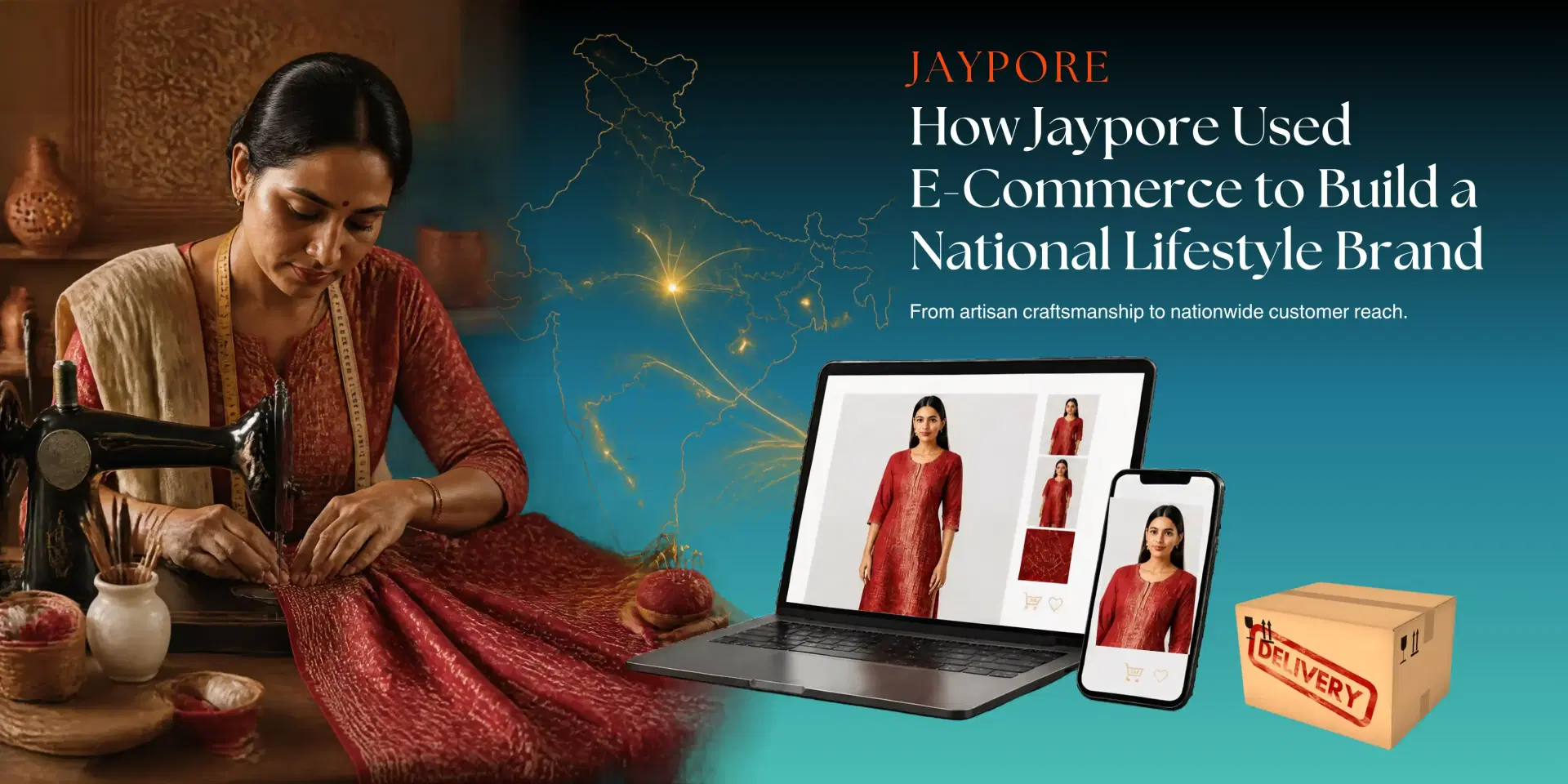
Many handicraft businesses create exceptional products but struggle to scale beyond their local markets. Limited footfall, dependence on exhibitions, and geographical constraints often prevent growth, regardless of product quality.
One Indian brand successfully overcame these challenges through e-commerce. Jaypore, a homegrown lifestyle brand focused on handcrafted products, used digital commerce to connect artisans with customers across India and transform traditional crafts into a scalable business model.
This case study explores how Jaypore leveraged e-commerce, storytelling, and digital branding to build a strong nationwide presence and what local handicraft retailers can learn from its journey.
The Challenge: Traditional Crafts Had Limited Market Access
India is home to thousands of artisan communities specializing in:
- Handloom textiles
- Block printing
- Pottery
- Jewellery
- Home décor
- Tribal and folk art
Despite the richness of Indian craftsmanship, artisans often faced common business challenges:
- Limited customer reach
- Dependence on local markets
- Seasonal demand fluctuations
- Lack of brand visibility
- Reliance on intermediaries
The problem was not the quality of products. The challenge was reaching the right customers at scale.
The Birth of Jaypore
Jaypore was launched with a clear vision: to bring India's handcrafted products and artisan stories to a wider audience through a digital-first platform.
Instead of opening multiple retail stores across India, the company chose to invest in e-commerce.
Its objective was simple:
Connect artisans directly with customers nationwide through an online shopping experience built around authenticity, craftsmanship, and storytelling.
This decision became the foundation of Jaypore's growth strategy.
Why E-Commerce Became the Growth Engine
1. Breaking Geographic Limitations
A traditional handicraft store typically serves customers within a specific city.
Jaypore's online platform changed that.
Customers from:
- Delhi
- Mumbai
- Bengaluru
- Hyderabad
- Chennai
- Pune
could access handcrafted products from artisan communities across India.
Instead of relying on foot traffic, the business gained a nationwide customer base.
Key Takeaway
E-commerce allows small handicraft businesses to sell beyond their city without investing in additional physical stores.
2. Using Storytelling to Differentiate Products
One of Jaypore's biggest strengths was its focus on storytelling.
The company didn't simply sell products. It highlighted:
- Artisan communities
- Traditional techniques
- Regional craftsmanship
- Cultural heritage
A handcrafted textile became more than a product.
It became a story.
This emotional connection helped customers appreciate the value of handmade products and strengthened brand loyalty.
Key Takeaway
People buy handcrafted products because of both their utility and the stories behind them.
3. Creating a Digital Catalogue Without Physical Limitations
Traditional stores are limited by display space.
An e-commerce platform eliminates this challenge.
Jaypore was able to showcase:
- Thousands of products
- Multiple artisan categories
- Seasonal collections
- Exclusive launches
The result was a significantly wider product assortment than most physical stores could offer.
Key Takeaway
An online store enables handicraft businesses to scale inventory visibility without increasing retail space.
How E-Commerce Data Helped the Business Grow
Unlike traditional retail, e-commerce provides valuable customer insights.
With every transaction, businesses can understand:
- Best-selling product categories
- Customer demographics
- Regional demand patterns
- Repeat purchase behavior
- Seasonal trends
These insights help businesses make smarter decisions regarding:
- Product development
- Inventory planning
- Marketing campaigns
- Pricing strategies
Instead of depending on assumptions, decisions become data-driven.
Key Takeaway
Customer data is one of the most valuable assets created by an e-commerce business.
Building a Brand, Not Just an Online Store
Many retailers focus only on transactions.
Jaypore focused on building a brand.
The company invested in:
- High-quality photography
- Premium website experience
- Consistent visual identity
- Content marketing
- Curated collections
As a result, customers started associating their purchases with the Jaypore brand rather than viewing them as individual products.
This shift helped improve:
- Customer trust
- Recall value
- Repeat purchases
- Long-term business growth
Key Takeaway
Successful e-commerce businesses build brand value, not just sales volume.
Expanding Beyond E-Commerce
Interestingly, Jaypore's expansion path differed from traditional retail businesses.
Most retailers follow this journey:
Store → Customers → Expansion
Jaypore followed a different model:
E-commerce → Brand Building → Nationwide Audience → Offline Expansion
After establishing a strong digital presence and customer base, the company gradually expanded into physical retail locations.
Because the brand already had recognition and demand, offline expansion became less risky and more strategic.
Key Takeaway
E-commerce can become a testing ground for growth before investing in physical retail expansion.
Business Lessons for Small Handicraft Retailers
Jaypore's journey offers practical lessons for every local business owner.
Build Your Online Presence Early
Customers increasingly discover products online before making purchasing decisions.
Tell the Story Behind Your Products
Handcrafted products become more valuable when customers understand the artistry and tradition behind them.
Invest in Product Photography
Professional visuals directly influence customer trust and buying decisions.
Use Multiple Sales Channels
Combine:
- Your own website
- Marketplaces
- Social media commerce
to reach a wider audience.
Focus on Brand Building
Customers may forget a product, but they remember a trusted brand.
Use Data to Improve Decisions
Customer insights can help optimize inventory, marketing, and overall profitability.
Why This Case Study Matters Today
Many local handicraft retailers believe e-commerce is only for large brands with significant resources.
Jaypore demonstrates the opposite.
Through:
- Digital commerce
- Storytelling
- Branding
- Data-driven decision-making
a handicraft-focused business was able to connect artisans with consumers nationwide and create a scalable growth model.
For today's retailers, geography is no longer a limitation.
The internet has become the largest marketplace available to small businesses.
Conclusion
Jaypore's success story shows how e-commerce can transform a handicraft business from a niche offering into a recognized national brand.
By combining technology with traditional craftsmanship, the company created a platform that expanded market access for artisans while delivering authentic handcrafted products to customers across India.
The biggest lesson for small retailers is clear:
Success is no longer determined by the location of your store. It is determined by how effectively you use digital channels to reach, engage, and serve customers.
For handicraft businesses looking to grow, e-commerce is not just another sales channel. It is a long-term growth strategy.
If you're a handicraft retailer or artisan business owner, start building your digital presence today. Invest in a strong e-commerce platform, tell your brand story, showcase your products professionally, and take your business beyond local markets. Your next customer could be anywhere in India.


