Build Next Generation Applications Faster Safer Smarter in 2026
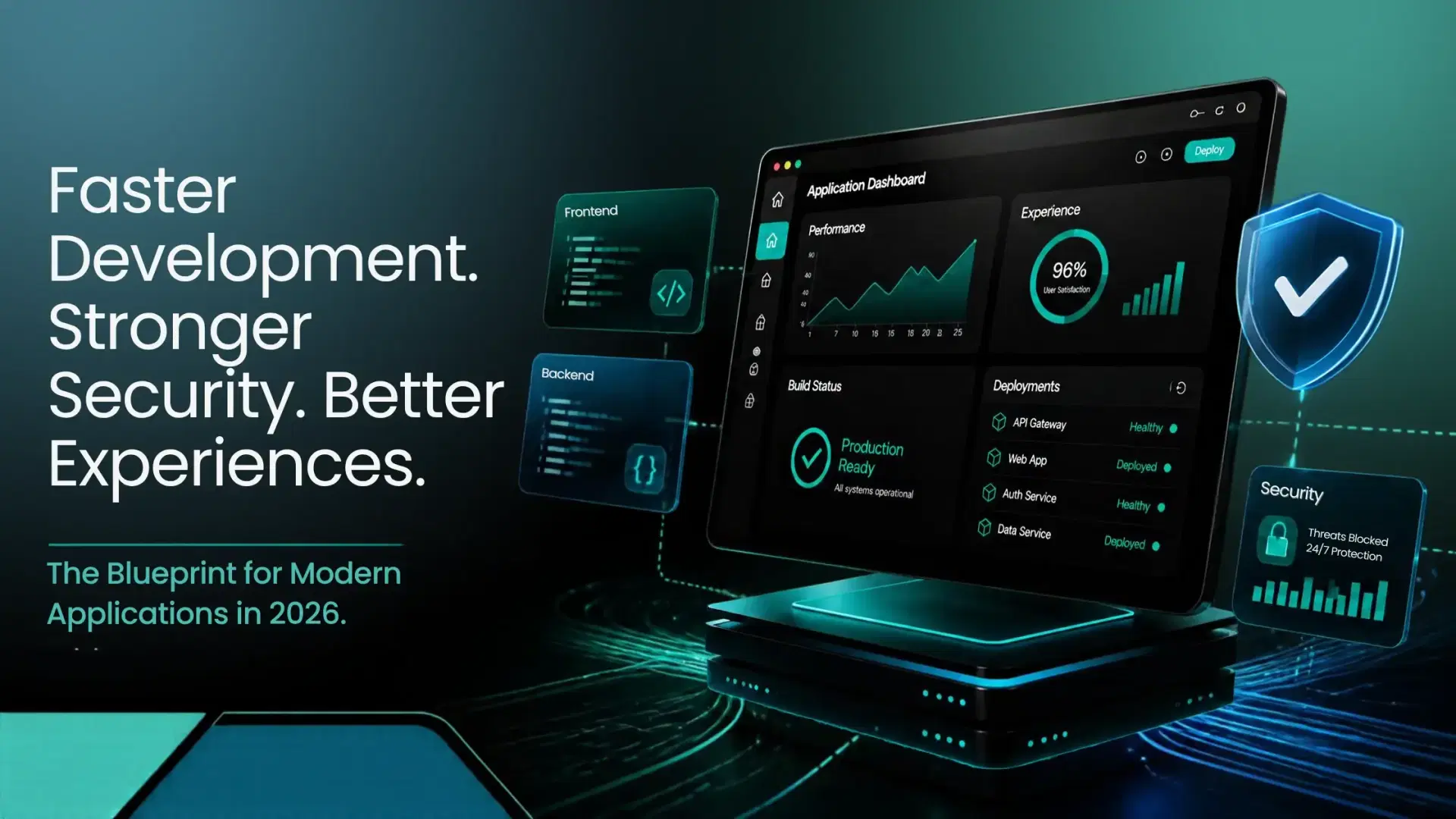
As technology continues to evolve, application development is becoming more complex and more critical to business success. Organizations are expected to deliver innovative digital solutions quickly while maintaining high standards for security, performance, and user experience.
In 2026, building successful applications requires more than writing code. Businesses must adopt modern development practices, leverage AI-powered tools, strengthen cybersecurity measures, and create user-centric experiences that adapt to changing market demands.
The companies that succeed will be those that can develop applications faster, secure them effectively, and continuously optimize them using data-driven insights.
The New Application Development Landscape
Modern applications are expected to:
- Deliver exceptional user experiences
- Scale on demand
- Maintain high availability
- Protect customer data
- Integrate seamlessly with other platforms
- Support rapid feature releases
Meeting these expectations requires a strategic approach that combines technology, automation, and collaboration.
In 2026, speed, security, and intelligence are no longer optional—they are fundamental business requirements.
Building Applications Faster
Adopt Agile Development Methodologies
Agile development remains one of the most effective approaches for accelerating software delivery.
Benefits include:
- Faster release cycles
- Continuous feedback
- Improved collaboration
- Reduced development risks
- Greater flexibility
By breaking projects into smaller development sprints, teams can respond quickly to changing business requirements and customer needs.
Leverage Low-Code and No-Code Platforms
Low-code and no-code tools continue to gain popularity because they reduce development time significantly.
These platforms enable businesses to:
- Rapidly prototype applications
- Automate workflows
- Accelerate internal software projects
- Reduce coding requirements
Developers can focus on complex challenges while business users contribute to application creation.
Implement DevOps Practices
DevOps helps organizations streamline software delivery by connecting development and operations teams.
Key DevOps practices include:
- Continuous Integration (CI)
- Continuous Deployment (CD)
- Automated testing
- Infrastructure as Code (IaC)
- Performance monitoring
These practices accelerate development while improving software reliability.
Use AI-Powered Development Tools
Artificial Intelligence is transforming software development.
AI-assisted tools help developers:
- Generate code
- Identify bugs
- Suggest improvements
- Create documentation
- Automate testing
By reducing repetitive tasks, developers can focus on innovation and problem-solving.
Building Safer Applications
Adopt a Security-First Development Approach
Cybersecurity threats continue to increase in sophistication.
Organizations should implement security throughout the development lifecycle rather than treating it as a final step.
This approach includes:
- Secure coding practices
- Threat modeling
- Risk assessments
- Security testing
- Vulnerability management
Embedding security into development reduces risks and improves resilience.
Implement DevSecOps
DevSecOps integrates security into DevOps processes.
Benefits include:
- Continuous security testing
- Early vulnerability detection
- Automated compliance checks
- Improved risk management
By shifting security left, organizations can identify and address issues before applications reach production.
Protect Data and Privacy
Data protection remains a critical priority in 2026.
Businesses should implement:
- End-to-end encryption
- Multi-factor authentication (MFA)
- Access control policies
- Data loss prevention measures
- Privacy-by-design principles
Strong security measures help protect sensitive information and maintain customer trust.
Conduct Regular Security Testing
Continuous testing helps identify vulnerabilities before attackers can exploit them.
Recommended testing practices include:
- Penetration testing
- Vulnerability scanning
- Security audits
- Compliance assessments
- Application security reviews
Proactive security management helps organizations stay ahead of evolving threats.
Building Smarter Applications
Integrate Artificial Intelligence
AI-enabled applications deliver more intelligent and personalized experiences.
Businesses are increasingly embedding AI capabilities such as:
- Predictive analytics
- Natural language processing
- Recommendation engines
- Intelligent automation
- Conversational AI
These features help organizations improve efficiency and increase customer satisfaction.
Utilize Real-Time Data Analytics
Modern applications generate vast amounts of data.
Real-time analytics helps organizations:
- Monitor user behavior
- Improve decision-making
- Detect anomalies
- Personalize experiences
- Optimize performance
Smarter applications use data to continuously evolve and improve.
Focus on Personalization
Customers increasingly expect digital experiences tailored to their preferences.
Application personalization can include:
- Customized content
- Product recommendations
- Adaptive interfaces
- Location-based experiences
- Behavioral targeting
Personalized applications often achieve higher engagement and retention rates.
Enable Intelligent Automation
Automation improves both user experiences and operational efficiency.
Smart applications can automate:
- Customer support
- Workflow approvals
- Data processing
- Reporting functions
- Scheduling tasks
Intelligent automation reduces errors and frees employees to focus on high-value activities.
Cloud-Native Application Development
Cloud-native architectures continue to dominate modern application development.
Benefits include:
- Scalability
- Reliability
- Faster deployment
- Lower infrastructure costs
- Improved flexibility
Popular cloud-native technologies include:
- Containers
- Kubernetes
- Microservices
- Serverless computing
- Managed cloud services
Organizations that embrace cloud-native development gain greater agility and operational efficiency.
Prioritizing User Experience (UX)
Even the most sophisticated application will fail if users find it difficult to use.
In 2026, successful applications focus on:
Simplicity
Clean interfaces improve usability and increase user adoption.
Accessibility
Applications should be designed to accommodate diverse user needs and accessibility standards.
Performance
Fast-loading applications reduce user frustration and improve engagement.
Consistency
Consistent design patterns create intuitive digital experiences.
Investing in UX leads to higher customer satisfaction and stronger business outcomes.
Leveraging Automation Across the Development Lifecycle
Automation has become essential for modern software development.
Key automation opportunities include:
- Testing
- Deployment
- Monitoring
- Security validation
- Infrastructure management
Benefits include:
- Faster delivery cycles
- Reduced human errors
- Improved consistency
- Enhanced scalability
The more routine processes organizations automate, the more time teams can devote to innovation.
Best Practices for Building Future-Ready Applications
To build faster, safer, and smarter applications in 2026, businesses should:
- Embrace Agile and DevOps methodologies
- Integrate security throughout development
- Adopt AI-powered development tools
- Utilize cloud-native architectures
- Focus on user experience
- Implement intelligent automation
- Leverage real-time analytics
- Prioritize data privacy and compliance
- Continuously monitor application performance
- Invest in ongoing innovation
These practices help organizations remain competitive in an increasingly digital marketplace.
The Future of Application Development
The future of application development lies in the convergence of:
- Artificial Intelligence
- Cloud Computing
- Automation
- Data Analytics
- Cybersecurity
Applications will become increasingly adaptive, predictive, and intelligent, delivering experiences that evolve based on user behavior and business needs.
Organizations that modernize their development strategies today will be better positioned to capitalize on future opportunities.
Conclusion
Building faster, safer, and smarter applications in 2026 requires a holistic approach that combines technological innovation with disciplined development practices. Businesses must prioritize speed without sacrificing security and leverage intelligence without compromising user trust.
By embracing Agile methodologies, DevSecOps, AI-powered tools, cloud-native technologies, and customer-centric design, organizations can create applications that not only meet today's demands but also adapt to tomorrow's challenges.
The companies that invest in these capabilities will be best positioned to accelerate innovation, improve customer experiences, and drive sustainable digital growth.


