Branding vs. Marketing: Key Differences Every Business Should Understand
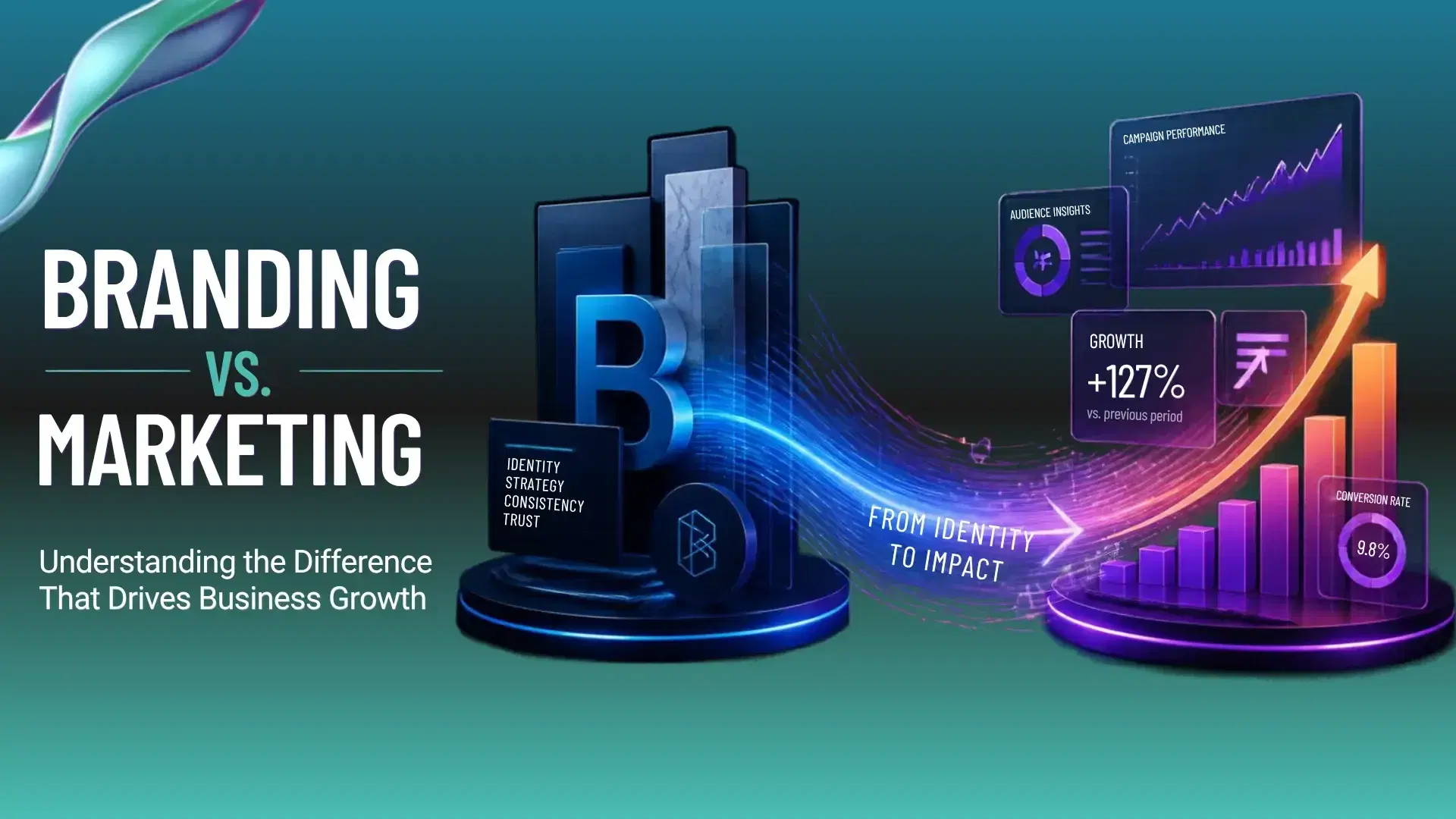
Many business owners use the terms branding and marketing interchangeably. While they are closely connected, they serve different purposes in building a successful business.
Simply put, branding defines who you are, while marketing promotes what you offer. Understanding the distinction can help businesses create stronger customer relationships, improve recognition, and achieve sustainable growth.
In this guide, we'll explore the differences between branding and marketing, why both are important, and how they work together to drive business success.
What Is Branding?
Branding is the process of creating a unique identity for your business. It shapes how customers perceive your company, products, and services.
Your brand is more than just a logo or color scheme. It includes:
- Company values
- Mission and vision
- Brand personality
- Visual identity
- Customer experience
- Tone of voice
- Reputation and trust
Branding creates an emotional connection between businesses and their audiences, helping customers remember and trust a company over time.
Key Components of Branding
Brand Identity
Brand identity includes all visual elements that represent your business, such as:
- Logo
- Typography
- Brand colors
- Design style
- Packaging
Brand Voice
Your brand voice reflects how you communicate with customers across all channels.
Examples include:
- Professional
- Friendly
- Authoritative
- Innovative
- Playful
Brand Values
Values communicate what your business stands for and help attract customers who share similar beliefs.
Customer Experience
Every interaction with customers contributes to your brand perception, from website navigation to customer support.
What Is Marketing?
Marketing refers to the strategies and activities businesses use to promote products or services and attract customers.
The primary goal of marketing is to generate awareness, leads, and sales.
Marketing activities may include:
- Search engine optimization (SEO)
- Content marketing
- Social media marketing
- Email marketing
- Paid advertising
- Influencer marketing
- Event marketing
Marketing helps businesses communicate their value proposition to the right audience at the right time.
Key Components of Marketing
Content Marketing
Creating valuable content that educates, informs, or entertains potential customers.
Examples include:
- Blog posts
- Videos
- Case studies
- Whitepapers
- Infographics
Social Media Marketing
Using platforms such as LinkedIn, Instagram, Facebook, and X to engage audiences and build visibility.
Search Engine Optimization (SEO)
Improving website visibility in search engine results to attract organic traffic.
Paid Advertising
Running targeted campaigns through platforms such as Google Ads, LinkedIn Ads, and Meta Ads.
Email Marketing
Building relationships with prospects and customers through personalized email communication.
Branding vs. Marketing: What's the Difference?
Although they work together, branding and marketing serve different functions.
| Branding | Marketing |
|---|---|
| Defines who you are | Promotes what you sell |
| Focuses on perception | Focuses on promotion |
| Builds trust and loyalty | Generates leads and sales |
| Long-term strategy | Short- and long-term strategies |
| Shapes customer emotions | Drives customer actions |
| Creates identity | Creates awareness |
A simple way to understand the difference is:
Branding is the reason people remember your business. Marketing is the reason they discover it.
How Branding and Marketing Work Together
Branding and marketing are most effective when aligned.
Without strong branding:
- Marketing messages may feel inconsistent
- Customers may struggle to differentiate your business
- Advertising efforts may deliver weaker results
Without effective marketing:
- Even the strongest brand may go unnoticed
- Customer acquisition becomes difficult
- Growth opportunities are limited
Together, branding and marketing create a complete business growth strategy.
Example
Imagine two companies selling similar products.
The first company has:
- A clear mission
- Strong visual identity
- Consistent messaging
- Positive reputation
The second company lacks consistent branding.
Even if both businesses invest the same amount in marketing, the first company is more likely to gain customer trust and long-term loyalty.
Why Branding Matters for Business Growth
Strong branding offers several long-term benefits.
Builds Trust
Customers are more likely to purchase from brands they recognize and trust.
Creates Recognition
Consistent branding makes your business more memorable in competitive markets.
Supports Premium Pricing
Customers often associate strong brands with higher value and quality.
Encourages Customer Loyalty
People are more likely to become repeat customers when they connect emotionally with a brand.
Differentiates Your Business
Branding helps businesses stand out from competitors offering similar products or services.
Why Marketing Matters for Business Growth
Marketing is essential for attracting new customers and generating revenue.
Increases Visibility
Marketing puts your business in front of potential customers.
Generates Leads
Effective campaigns help attract qualified prospects.
Drives Sales
Marketing motivates customers to take action and make purchasing decisions.
Supports Business Expansion
Strategic marketing helps businesses enter new markets and reach wider audiences.
Measures Performance
Marketing provides data that helps businesses optimize future campaigns and improve results.
Common Mistakes Businesses Make
Many businesses struggle because they focus on one area while neglecting the other.
Investing Only in Marketing
Running ads without a clear brand can generate traffic but fail to build lasting relationships.
Focusing Only on Branding
A great brand without promotion limits customer acquisition and growth opportunities.
Inconsistent Messaging
Different messages across platforms can confuse customers and weaken trust.
Ignoring Customer Experience
Poor service can damage even the most well-designed brand identity.
How to Build a Strong Brand and Marketing Strategy
To maximize business growth:
Define Your Brand Foundation
Establish:
- Mission
- Vision
- Core values
- Brand personality
- Target audience
Create Consistent Brand Guidelines
Maintain consistency across:
- Website
- Social media
- Advertising
- Email campaigns
- Sales materials
Develop a Marketing Plan
Include:
- SEO strategy
- Content marketing
- Paid advertising
- Social media campaigns
- Lead generation tactics
Measure and Optimize
Track key performance indicators (KPIs) such as:
- Website traffic
- Conversion rates
- Lead generation
- Customer retention
- Brand awareness
Use insights to continuously improve both branding and marketing efforts.
The Future of Branding and Marketing
As digital channels continue to evolve, customers expect authentic and personalized experiences from businesses.
Companies that combine strong branding with data-driven marketing are more likely to:
- Build customer trust
- Increase engagement
- Improve retention
- Drive sustainable growth
Businesses that invest in both areas create stronger connections with customers and gain a competitive advantage in the marketplace.
Conclusion
Branding and marketing are not competing strategies. They are complementary functions that work together to support business success.
Branding defines your identity, shapes customer perceptions, and builds long-term trust. Marketing communicates that identity, attracts potential customers, and drives measurable business results.
The most successful businesses understand that branding and marketing are strongest when they work hand in hand.


